

What is design in 2026?
Thoughts on Milan Design Week


Every April, Milan doesn’t just host a design event, it becomes one. What we now call Milan Design Week began in 1961, when a group of Italian furniture makers, bound together under the Federelegno-Arredo trade association, decided that the things they made deserved a stage. Their goal was modest and quietly radical: to put Italian craftsmanship in front of the world, and to insist that furniture was culture.
The first edition drew nearly 12,000 visitors - proof, even then, that people were hungry for beauty with intention. Over the following decades, the event grew: the Salone del Mobile anchored the fair itself at the FieraMilano complex in Rho, while the Fuorisalone (a spontaneous, unplanned flowering of installations, talks, and pop-ups that began organically in the early 1980s) spread design into the city’s streets, courtyards, and hidden palaces.
Today, nearly half a million people pass through Milan during that one week each spring, which brings us to the question: what is smart design in 2026? Fashion brands have taken over the scene by hosting major events and installations. The city is stuck with traffic and pollution, but it’s still an amazing occasion to learn about interesting new projects, materials, and ideas.
A part of Simply Diligent, Virginia, currently lives in Milan, so we had to give you a little sneak peek of what we thought was interesting.
The coolest thing is that amazing palaces, houses, and abandoned locations are opened for this specific occasion. It’s an incredible opportunity to visit corners of the city that you wouldn’t otherwise ever be able to see.
However, our focus remains Fashion, and we’re here for this.
Fashion arrived at Design Week with good intentions and a very large budget. Over the past two decades, luxury houses have made April in Milan their own kind of runway, not for clothes, but for immersive installations, temporary pavilions, and sensory experiences designed to last exactly seven days before being dismantled and sent, largely, to landfill. There is something worth sitting with in that image: tons of custom-fabricated materials, hand-finished surfaces, engineered lighting rigs, all conceived to generate thousands of social media posts. These installations are not design, they are marketing dressed in design’s language. That is not to say beauty has no place here, or that spectacle is inherently empty. But there is a difference between a small designer who uses this week to genuinely push material thinking forward, and one who erects a mirrored labyrinth for the algorithm. Of course, I went around looking for small designer innovations.
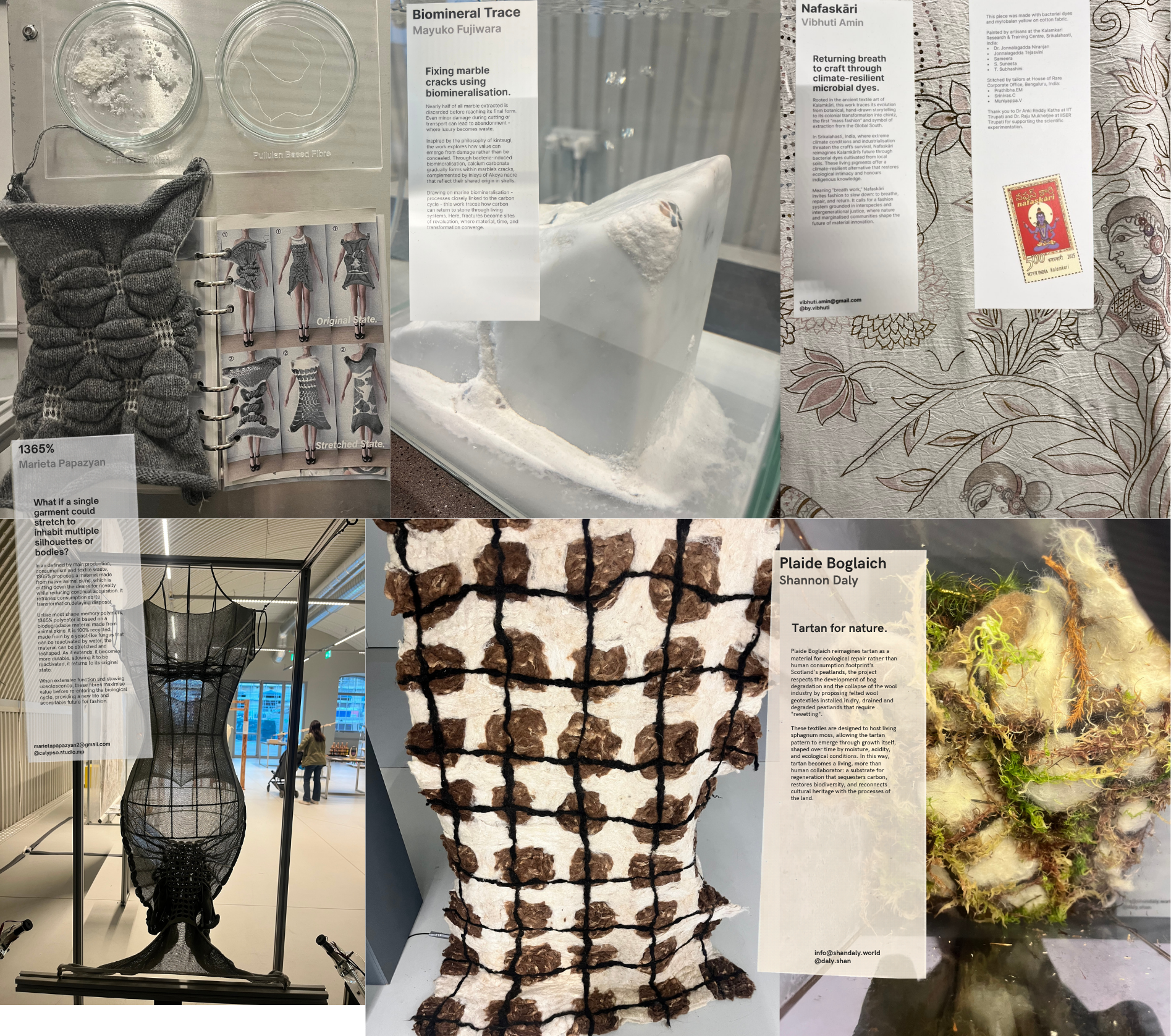
Things started really well at Dropcity, under the train tracks going to the central station, an amazing space that was abandoned until a few few years ago, which used to only be open during the design week, and now hosts workshop spaces for artisans focusing on Architecture and Design, including ceramics making and weaving.
Our favourite projects include a weaving technique which is adaptive to different types of bodies. This could reduce waste if we didn’t have sizes, and our clothes could follow us throughout different phases of our lives. We also loved a project which is not so related to Fashion but highlighted the waste issue in the marble industry. Finally, using wool from local farms to regenerate ecosystems. If you haven’t read our latest article yet, you should really check it out, and it will convince you that wool is an amazing material.


The wandering around continued, seeing showrooms where sustainability was never considered, beautiful textiles, but with no history or specific meaning. Picture old churches turned into home textile shows - still worth a visit.
I passed through the centre in Brera, it was impossible to cycle around, roads were blocked with vans delivering food, and queues were at least 1h for each. Hermès, Prada, Miu Miu, Gucci, Louis Vuitton, Bottega Veneta, and Loro Piana... I still read about them, chatted with friends who had the patience to go, and saw videos online.
Gucci filled the 16th-century monastery of San Simpliciano with Gucci Memoria - twelve tapestries tracing the house’s 105-year history, same stunning location as last year. Loro Piana presented Studies, Chapter 1: On the Plaid, twenty-four plaids each treated as a discrete study in material and process, one constructed in cashmere velour with three layers of hand-trimmed appliqué and glass beads, requiring 1,850 hours to complete. Miu Miu returned to the Circolo Filologico Milanese with the fourth edition of its Literary Club, Politics of Desire, built around the work of Annie Ernaux and Ama Ata Aidoo. These are, by fashion’s standards, the most thoughtful offerings on the calendar. And yet the wider picture is harder to sit with: more than forty fashion houses staged events across the city, most of them built from custom fabrications that exist for no purpose beyond the week.
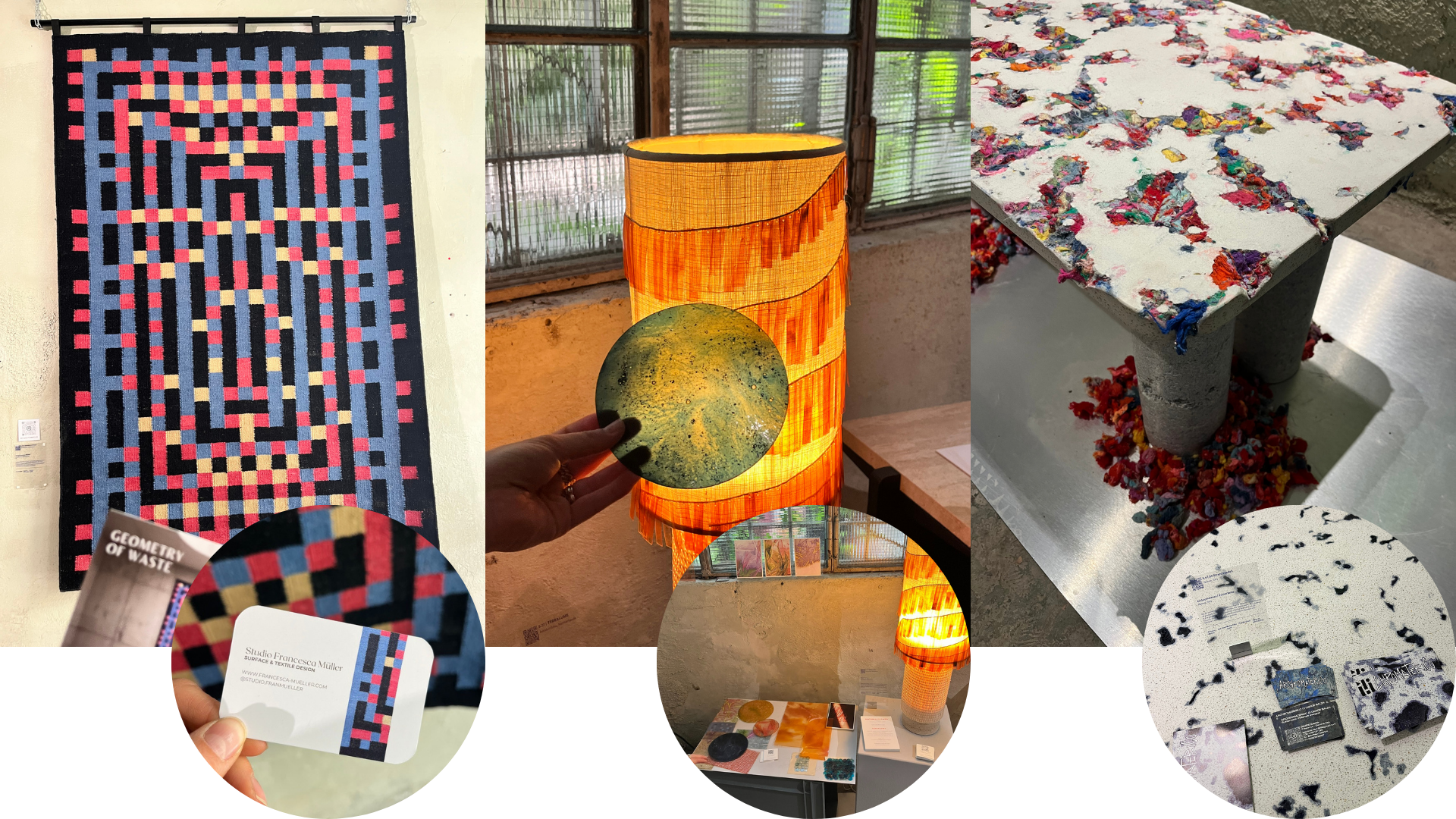
Moving to Isola, I found some of my favourite projects. Carpets woven using yarn waste and production ends, which are still perfect but often discarded. Algae and biopolymers to make beautiful translucent materials, which can be used in fashion and stunning lamps by Beatrice Spadea. Archeo Materico is an amazing project by Davide Balda, focused on making furniture with textile waste.
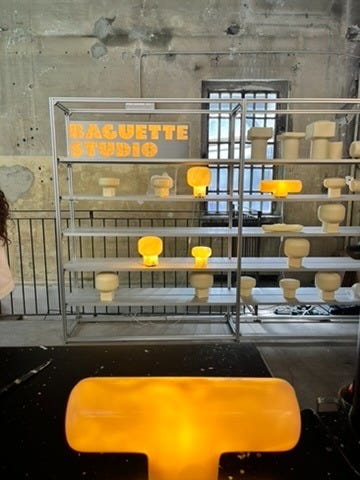
Also not so focused on Fashion - but - wax lamps that create this beautiful light, and can be melted and repaired if damaged? YES!
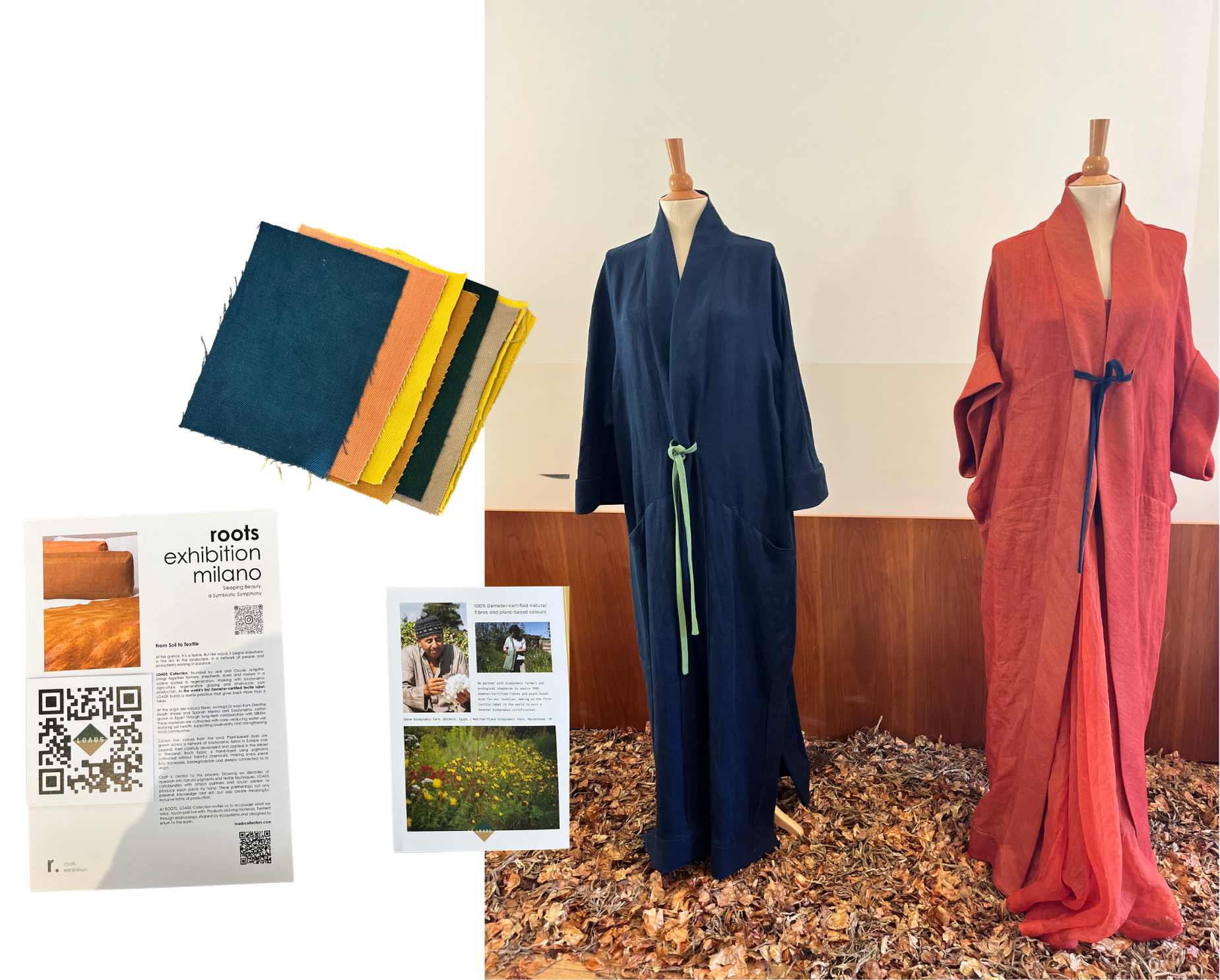
And then, on an amazing floor on Dutch design focused on sustainable solutions, we met Claudy Jongstra, who has spent decades building something that cannot be dismantled - a practice that begins on a biodynamic farm in Friesland, where she raises Drenthe Heath sheep and cultivates heirloom dye plants to produce the raw materials for her monumental textile works and architectural installations.Her work has reimagined systems of production, driven by a deep respect for the interwoven relations between natural materials, biodiverse ecologies, local communities, and intergenerational knowledge. Her tapestries are held in the permanent collections of MoMA, the V&A, and the Stedelijk - and here in Milan she was presenting a model to adapt her work to home textiles.
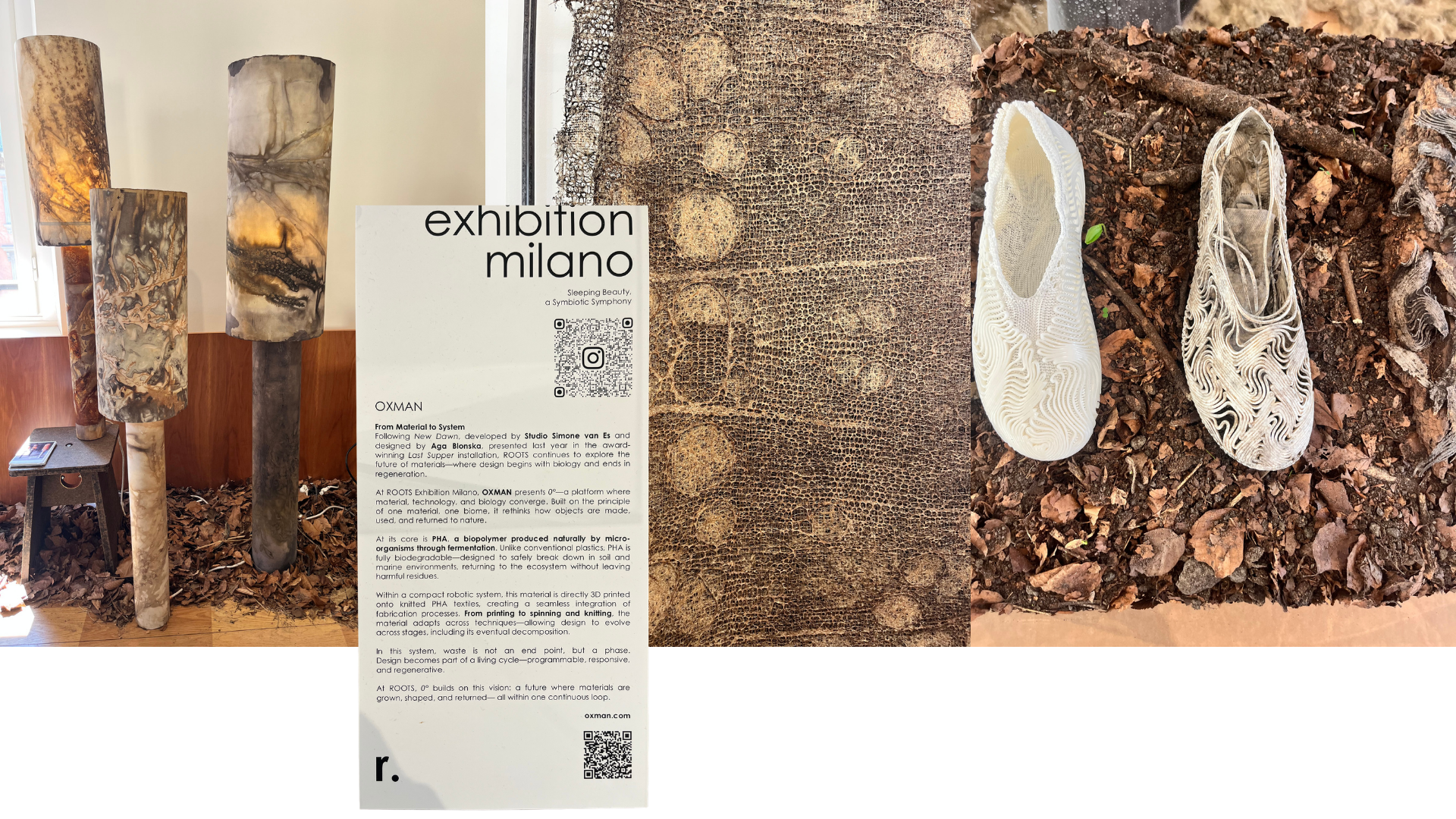
To us, it seems obvious that design should be aimed at solving specific issues rather than just being visually interesting, whether it’s using regenerative or recycled materials, offering solutions that don’t currently exist, and helping people live better lives. However, even in times of crisis, a lot of designs don’t seem to have any objective beyond aesthetics.
From there, the next stop was Alcova - the curatorial platform founded in 2018 by Valentina Ciuffi and Joseph Grima, dedicated to showcasing design in unconventional, historically rich locations rather than the polished neutrality of a trade fair. Each year, the platform transforms forgotten or inaccessible spaces into a temporary microcosm of design research. The part of the eleventh edition that I saw unfolded across the Baggio Military Hospital - a post-World War One complex that reads like a city within a city, where architecture and nature have slowly grown into each other. Whatever you find inside is almost secondary. The location alone is worth the trip.


There was an entire room dedicated to textile waste, though the solutions on show didn’t feel particularly revolutionary. An employee was feeding discarded clothing onto a moving rail, which carried it to a container and back again in a loop - a gesture meant to visualise the continuous cycle of production and destruction in fashion, but one that didn’t extend much beyond the image itself. Some designers were presenting upcycling work , which however felt modest in ambition when held against the richness of everything else in the building. It felt a bit more more illustrative than propositional.
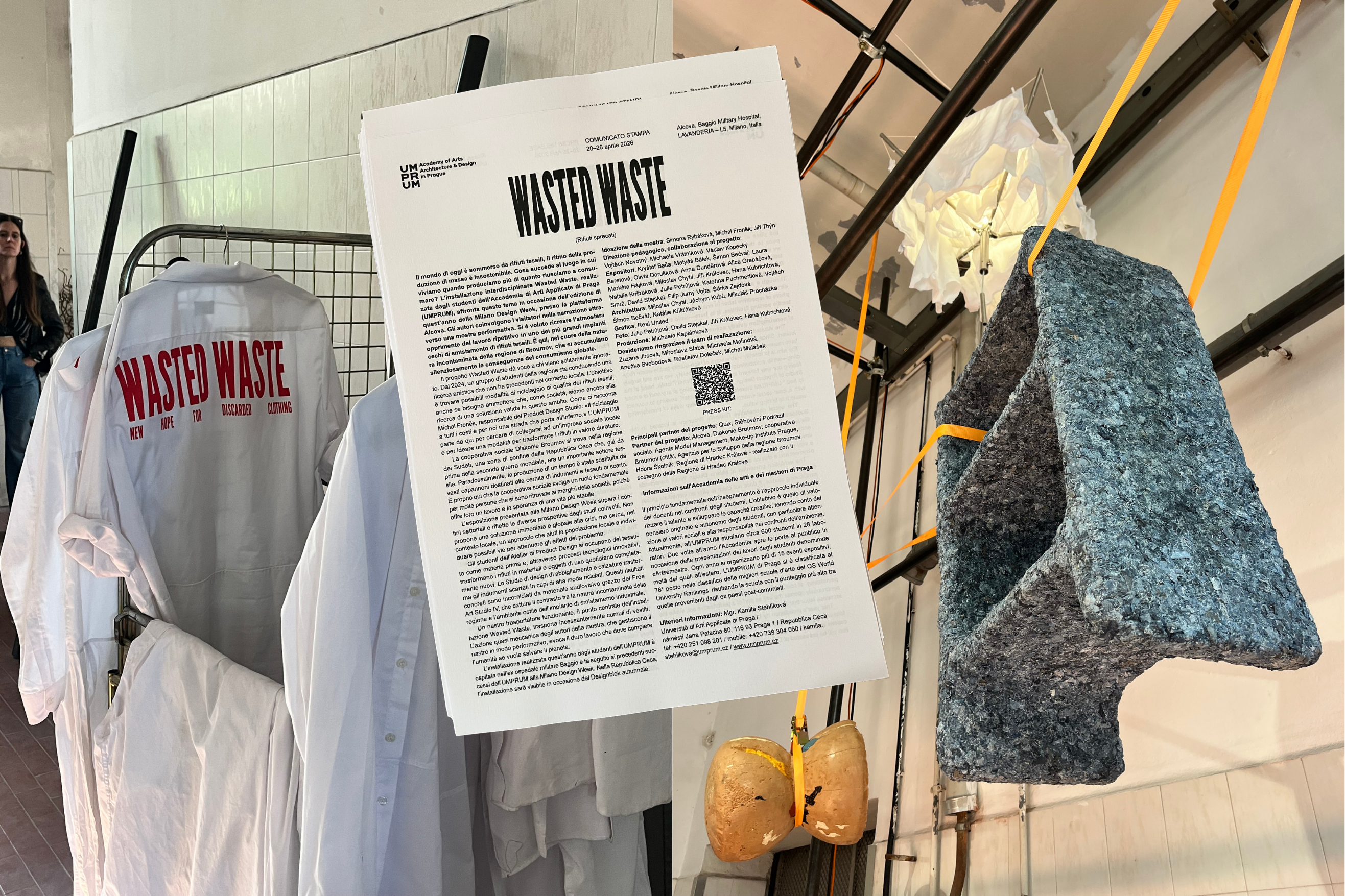
Not related to fashion at all, but very much related to our personal love of bread, my favourite installation was a table entirely made of bread, including forks, plates, and table mats.


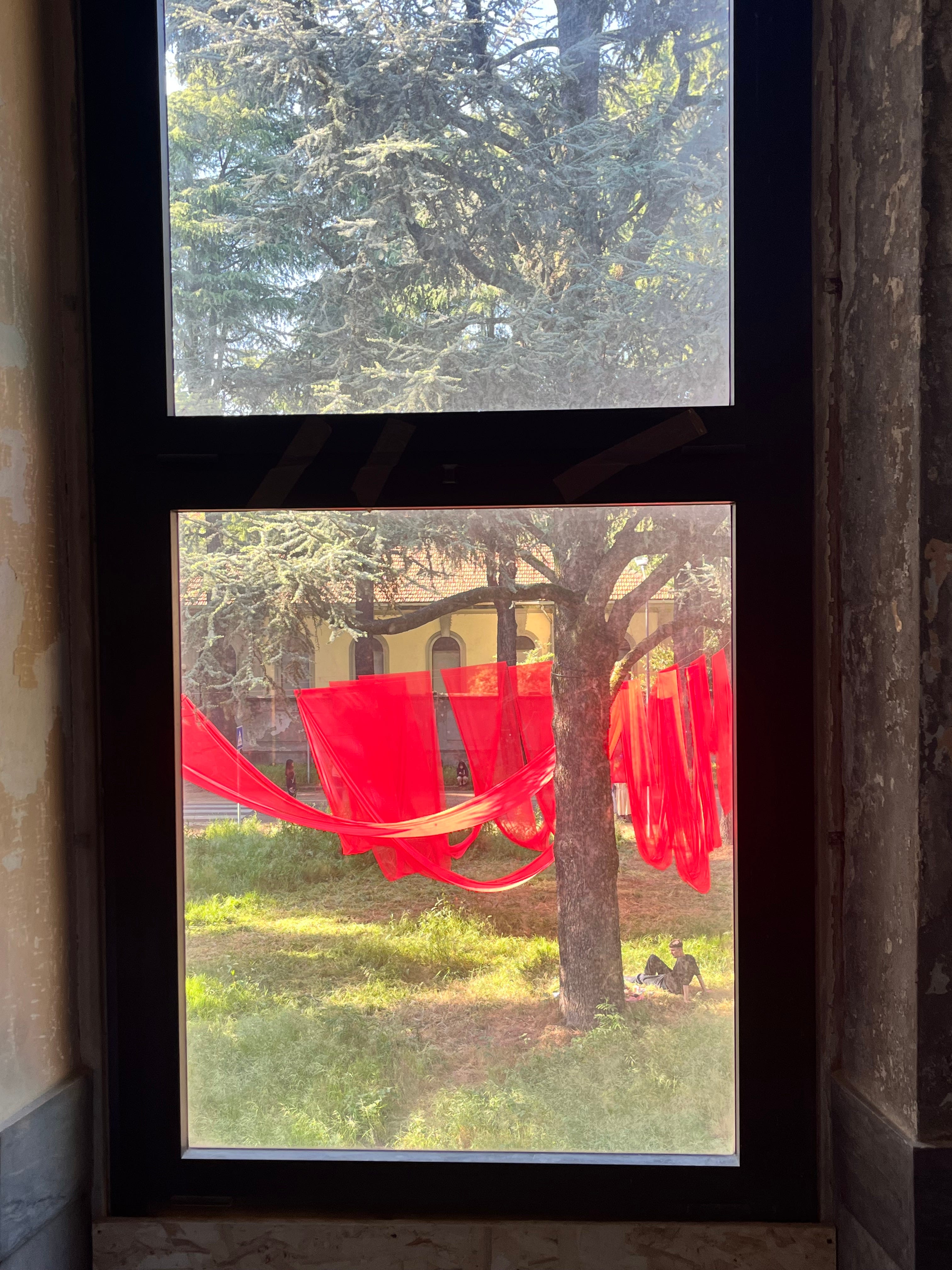
A beautiful installation in the middle of the trees was sadly 100% polyester with no story to it. We will always love seeing light going through leaves and textiles, though.
Last but not least, my favourite exhibition was on textile designer Frans Dijkmeijer in Triennale. Tucked within the week’s quieter offerings was an exhibition that asked for a different kind of attention. Kvadrat - the Danish textile company whose fabrics have shaped modernism for decades - used this year’s Design Week to honour him. The Dutch master weaver, whose collaboration with the brand began in 1992, produced some of its most enduring textiles. Dijkmeijer, who lived and worked in a castle in rural France until his death in 2011, was not the kind of designer who chased seasons. His practice was one of radical patience - small adjustments, repeated experiments, a studio that functioned more like a laboratory than an atelier. The exhibition draws from his archive, made public here for the first time: plain white envelopes filled with samples, yarns, and handwritten notes that together form a portrait of a man for whom a single change in fibre could alter the entire character of a cloth. What makes it affecting is not nostalgia, but precision - the sense that Dijkmeijer understood textiles as a form of quiet thinking, where the construction was the idea, and the idea was never quite finished.
Even all installations were made of cardboard, easy to reuse and eventually recycle. Yes to slow sustainable design!


The distance between design as it is and design as it needs to be is an issue. The problems are not abstract - material waste, ecological collapse, the slow erosion of craft knowledge, the concentration of beauty in the hands of those who can afford it. They require the discipline to slow down, focus on durable pieces, that carry love and care, to make things whose value is not legible in a single glance. We believe that permanence is not an aesthetic choice, but an ethical one.
Until next time friends, always be curious and stay diligent xx
 | A guest post by
|